used fanuc parts
Used and surplus FANUC parts
Most of the world's FANUC spare-part trade runs on used and surplus original units, and this page exists to make that trade legible: what the condition words mean at this desk, what they never mean, and what to confirm before a used part is ordered.
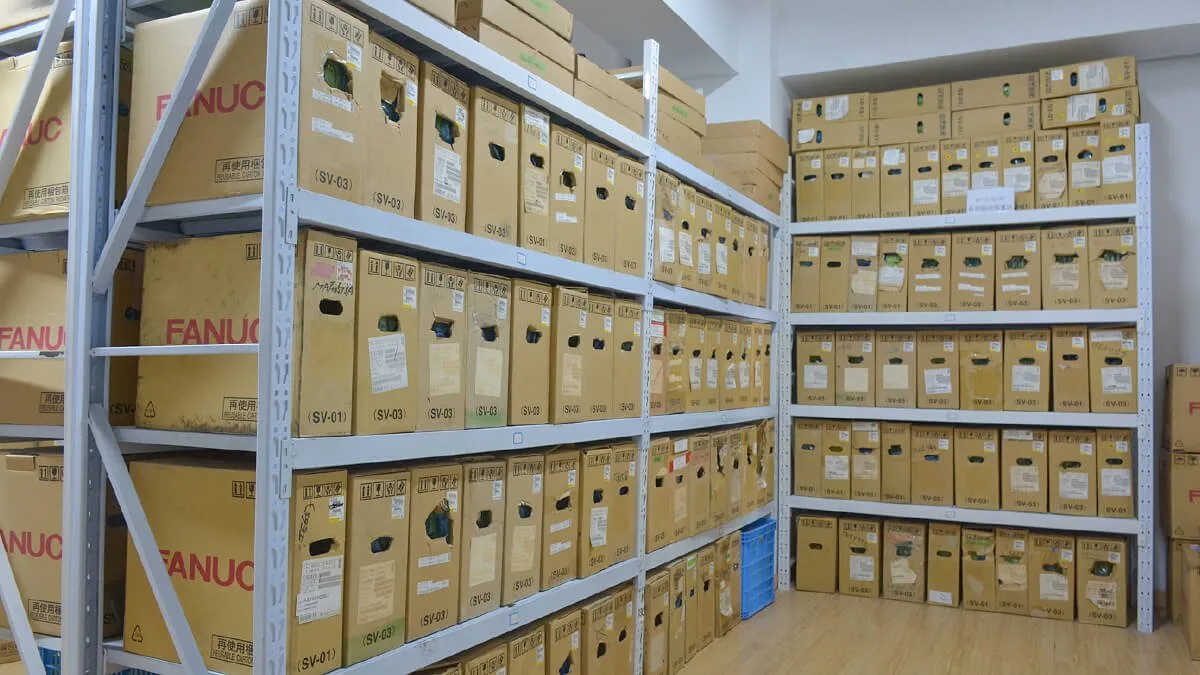
New, new-surplus and used stock
Every unit in the catalogue is an original FANUC unit; condition describes its life, not its authenticity. New means unused stock in its proper state. New-surplus means unused stock that reached the shelf outside the original sales channel — a cancelled project's spare, a distributor's remainder. Used means the unit has served in a machine and been removed, in working order, for resale. The seller's listings use these words in these senses, and this site never upgrades a word: a used unit is described as used on its listing, its detail page, and its invoice-facing paperwork alike.
The comparison below summarises the ladder. What it cannot show is the individual unit, which is why condition at this desk is always a statement about a specific unit on a specific shelf, made when the inquiry is answered — not a blanket promise about a part number.
| Condition | What it means here | Seller warranty |
|---|---|---|
| New | Unused original FANUC unit | 1 year |
| New-surplus | Unused original unit held as surplus stock | 1 year |
| Used | Original unit removed from service, tested before dispatch | 3 months |
| Repaired (seller's bench) | Buyer's own unit, repaired and bench-tested | As stated with the repair quotation |
What used never means here
Used does not mean untested, and it does not mean sold as seen. A used unit at this desk has passed the same functional gate as any other unit before dispatch — powered, run, observed — because the seller's warranty stands behind it: 3 months on used parts, during which a defective unit is repaired, replaced or refunded under the seller's published terms. Used also does not mean cosmetically new. Housings carry their service marks, and the condition answer describes the individual unit's state rather than borrowing a photograph of a cleaner one.
The warranty deserves one clarification, because it is often misread in this trade: it is the seller's warranty on the goods it sells. It is not a FANUC warranty, it does not come from FANUC Corporation, and this site never presents it as one. The seller stands behind its own stock in its own name.
Checks to confirm before ordering a used unit
Four confirmations turn a used-part order from a hope into a transaction. Confirm the exact part number including suffix, read from the fitted unit. Confirm the stated condition of the specific shelf unit, not the family in general. Confirm the test: that the unit will be run before dispatch, and ask for the test video — the seller offers it, and for used goods it is the single most valuable artefact in the deal. And confirm the warranty period that attaches to the unit's condition, so the paperwork matches the understanding.
Beyond those four, the family pages carry the part-specific checks: suffix discipline on the 6222 pair, picture quality on displays, cable and detent state on the handwheel, screen and key rows on the teach pendant. A buyer who works through the four confirmations and the family check has done everything a careful buyer in this market can do.
When used is the right buy — and when it is not
Used is the right buy when the machine's remaining life is finite, when the part is a feedback device or pendant whose state can be fully demonstrated on the bench, or when the alternative is a long wait for new stock against a stopped machine. It is the wrong buy when the buyer cannot afford a second stop and the part is a power-stage unit whose history matters, or when the paperwork of the end customer demands new goods. The desk will say which side of that line a given inquiry falls on when asked directly; the supplier page is the place to ask it.
Surplus deserves its own sentence: new-surplus is the market's best value when it exists — unused units at used-market prices — and its only catch is availability, which follows other people's project cancellations rather than any catalogue's plan. Asking for it by name costs nothing.
Related pages
Send an inquiry
Send the part numbers you need, or the number of a unit you want assessed, with the machine each belongs to. One desk answers for the shelves and the bench.
Open the inquiry form