Buying used and surplus FANUC parts: condition checks to confirm on inquiry
The used market is where most FANUC spare parts actually change hands, and it rewards buyers who ask four specific questions and punishes those who ask one vague one. This guide names the four, adds the family-specific checks that matter most, and explains the warranty that should stand behind a used unit.
From the Spareaxis blog — guides for buyers of FANUC spare parts.
The condition words, used precisely
Three words carry the market: new, new-surplus and used. New is unused stock. New-surplus is an unused original unit that arrived outside the original sales channel — the cancelled project's spare shelf, the distributor's remainder — and it is the market's best value when it can be found. Used is a unit that has served and been removed in working order. Every word describes an original FANUC unit; condition is a statement about a unit's life, never about its authenticity, and any seller whose wording blurs that line is telling the buyer something important.
The desk's own usage is documented on the condition guide page, including the rule that a word is never upgraded: a used unit is sold as used, priced as used and warranted as used. A buyer comparing offers across sellers should translate every offer into these three words before comparing prices, because a price is only meaningful against the word it carries.
Confirmation one and two: identity and individual condition
Confirm the exact part number, suffix complete, read from the fitted unit being replaced — the part-number guide shows the anatomy and the traps, from the 6222 suffix pair to the A860 near-numbers. A used order against a wrong number is doubly wasted, because the used unit that arrives exists once and its return journey helps nobody.
Then confirm the condition of the individual unit on offer, not the part number in general. Used stock is a population of one-of-each: the meaningful statement is about the unit that will be boxed. Ask what the word is for that unit, and — where the family makes it relevant — what it describes: picture state on a display, detent and cable state on a handwheel, key rows and screen on a pendant.
Confirmation three and four: test evidence and warranty
Confirm the test. A used unit worth buying has been run before dispatch — powered, exercised in its function, observed — and the seller in this catalogue offers a test video of tested goods, which converts the test from a claim into an artefact the buyer can watch. Ask for it by name; on a used amplifier, a used controller or a used display it is the strongest single piece of evidence in the transaction.
Confirm the warranty that attaches to the unit's condition. At this desk the seller's published terms give 1 year on new parts and 3 months on used parts, during which a defective unit is repaired, replaced or refunded. Two clarifications protect the buyer: the warranty is the seller's own, standing behind its own stock — it is not a FANUC warranty and should never be sold as one — and its period follows the condition word, which is one more reason the word must be agreed in writing before the unit ships.
The surplus question
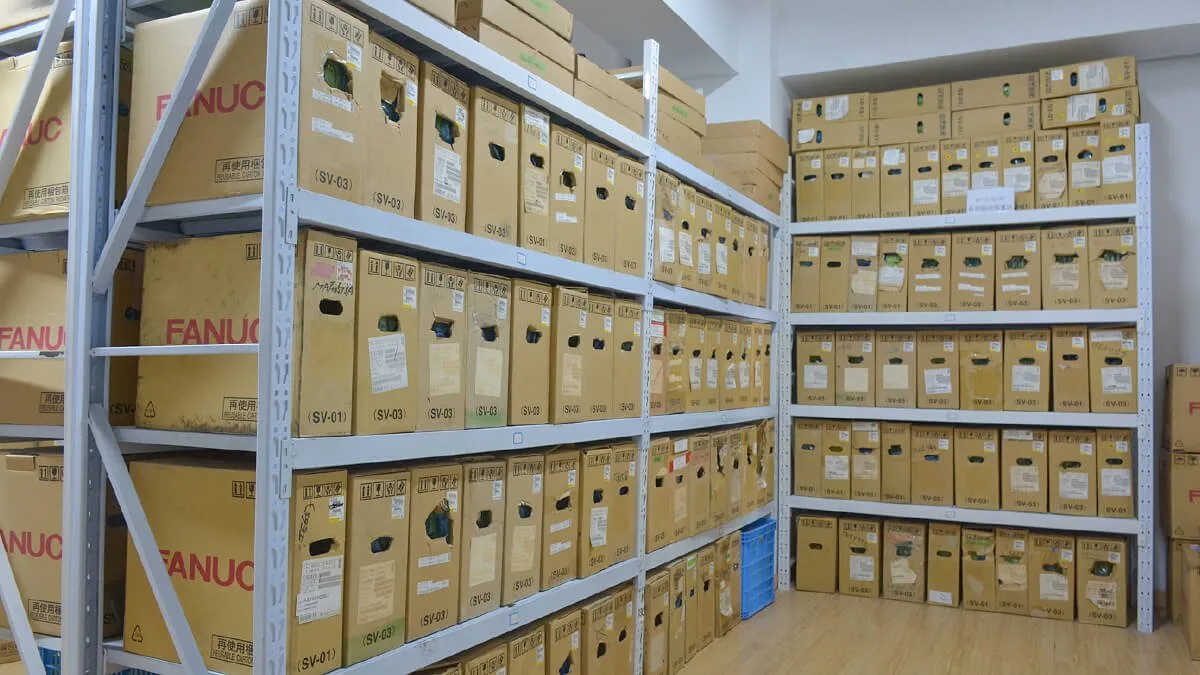
Ask about surplus explicitly. New-surplus units surface irregularly — a project's cancellation, a fleet standardisation — and sellers do not always volunteer them when a buyer asks only for used or only for new. The surplus question costs one line: is this number held as new-surplus? Where it is, the buyer gets an unused unit at a used-market price, warranted as new. Where it is not, nothing has been lost but the line it took to ask.
Surplus has one discipline of its own: it cannot be back-ordered. A surplus unit is a found object; when it is gone, the same number returns to the ordinary new-or-used choice. Buyers building a spares shelf for a critical machine treat found surplus accordingly — bought when seen, against a written stock plan, not when needed.
When to walk past a used unit
Used is wrong in recognisable cases. When the machine cannot afford a second stop and the part is a power-stage unit, the price difference to new buys risk reduction that matters. When the buyer's own customer paperwork demands new goods, no bench video cures the mismatch. When the seller cannot state the individual unit's condition, cannot test, or cannot say what warranty stands behind it — each inability is information, and together they describe a parcel rather than a part.
None of that indicts the used market; it describes its terms of engagement. Engaged properly — number confirmed, individual condition stated, test evidenced, warranty written — a used FANUC part from a stocked, bench-equipped seller is the rational default for most of the machines still running these controls, which is why the market exists at its present scale.
Reading a used listing line by line
A used listing is four statements wearing one coat, and each deserves its own question. The condition word says what the unit is claimed to be — used, surplus, pulled working — and the buyer should ask what observation stands behind the word. The test statement says what was done to the unit, and the difference between powered once and run on a bench is the difference between a hope and a result. The warranty line says whose promise stands behind the unit and for how long, and on a used part that promise is the seller's own, so its terms should be quotable in the reply, not discovered later.
The fourth statement is the photograph, and it is the only one the buyer can check without asking. A listing photograph should show the actual unit and its actual label, with the part number legible; a photograph of a similar unit, or of a shelf of similar units, supports none of the other three statements. Listings that survive this reading — condition explained, test described, warranty quoted, label photographed — are the ones worth a buyer's money, wherever they are found. The rest are priced like certainty and documented like rumours.
A final habit ties the four readings together: ask for the label photograph before paying, not after. The photograph fixes which physical unit the condition word, the test statement and the warranty line are about, and it gives the buyer a record to compare against the unit that arrives. When the arriving unit's label differs from the photographed one, every other statement in the listing has to be re-earned — and a seller with nothing to hide treats that comparison as routine.
Related pages
Send an inquiry
Send the part numbers you need, or the number of a unit you want assessed, with the machine each belongs to. One desk answers for the shelves and the bench.
Open the inquiry form